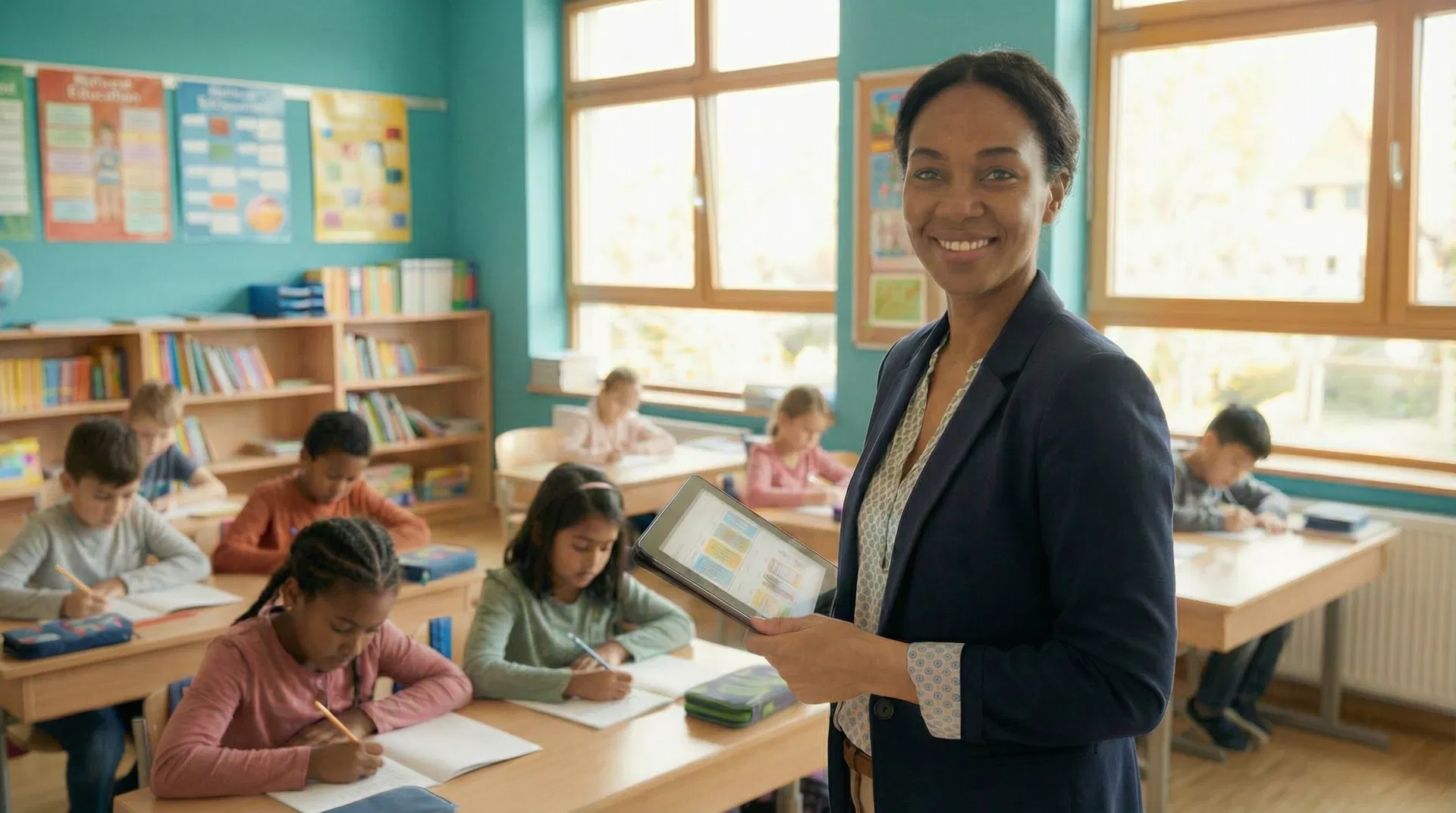
In today's diverse elementary classrooms, the one-size-fits-all approach to teaching is as outdated as blackboards and chalk. Our students arrive with a spectrum of learning styles, prior knowledge, cultural backgrounds, and readiness levels. This is where differentiated instruction (DI) becomes not just a buzzword, but a powerful pedagogical framework that empowers us to meet the unique needs of every child. Whether you're teaching in a bustling urban school in New York or a vibrant rural classroom in Trinidad, the goal remains the same: to ensure all students can access, engage with, and master the curriculum.
What is Differentiated Instruction?
At its core, differentiated instruction is a teaching philosophy that recognizes and responds to student differences. It's not about creating 25 different lesson plans for 25 students, but rather providing varied approaches to content, process, product, and learning environment. The aim is to maximize each student's growth and individual success by tailoring instruction to their readiness, interests, and learning profile.
For instance, in a USA Common Core aligned ELA lesson on main idea for Grade 4, some students might be ready to analyze complex informational texts, while others might still be grasping the concept with simpler narratives. Similarly, in a T&T Ministry of Education Standard 3 Science lesson on plant parts, some students might thrive with hands-on dissection, while others might benefit more from visual aids and labelled diagrams. DI allows us to cater to these variations.
Practical Strategies for Differentiated Instruction
Let's explore some actionable strategies you can implement across content, process, product, and environment.
1. Differentiating Content: What Students Learn
Content refers to the "what" of learning – the knowledge, concepts, and skills students need to master.
- Tiered Content: Offer different levels of complexity or depth for the same core concept.
- USA Example: For a Grade 5 Social Studies unit on the American Revolution (CCSS ELA standards for reading informational text), provide three reading passages on the Boston Tea Party: one simplified with vocabulary support, one at grade level, and one with advanced historical analysis questions. All students learn about the event, but at their appropriate reading level.
- T&T Example: In a Standard 4 Mathematics lesson on fractions (T&T MoE Curriculum: Number), some students might work with concrete manipulatives to understand equivalent fractions, while others might move directly to pictorial representations or abstract calculations.
- Varied Resources: Provide a range of materials to access information.
- Offer textbooks, articles, videos, podcasts, and even guest speakers. For a science topic on ecosystems, some students might prefer reading a chapter, while others might learn best from a documentary or an interactive simulation.
2. Differentiating Process: How Students Learn
Process refers to the "how" of learning – the activities students engage in to make sense of the content.
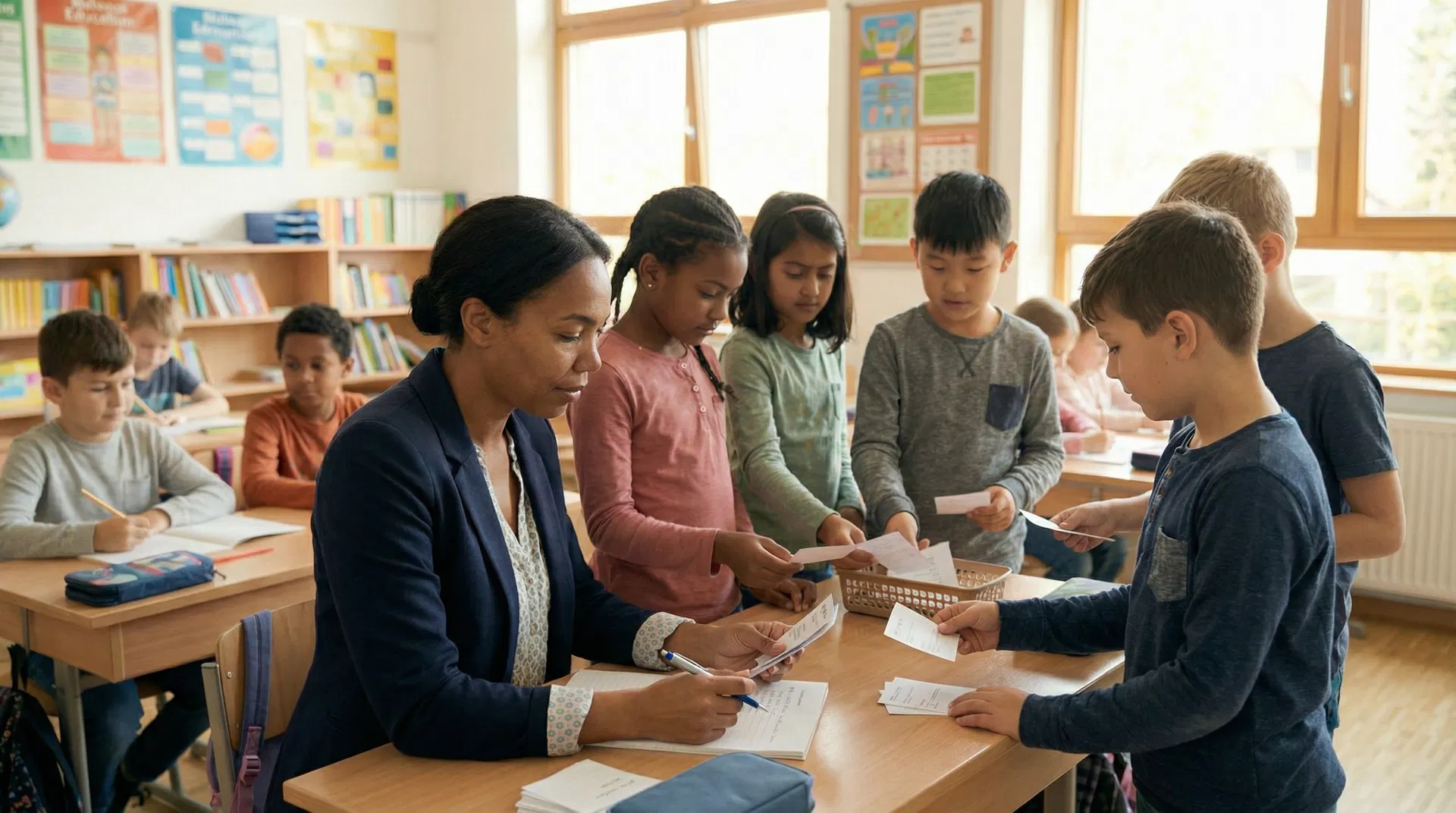
- Learning Stations/Centers: Create different stations where students work on varied tasks related to the same objective.
- USA Example: In a Grade 3 ELA lesson on story elements (CCSS ELA: RL.3.3), one station could involve matching characters to traits, another could be writing a summary of a simple story, and a third could be using a graphic organizer to analyze the plot of a more complex text.
- T&T Example: For a Standard 2 Social Studies lesson on community helpers (T&T MoE Curriculum: Social Studies), one station might have students drawing community helpers and their tools, another could involve role-playing different helper scenarios, and a third could be researching a specific helper using provided books or tablets.
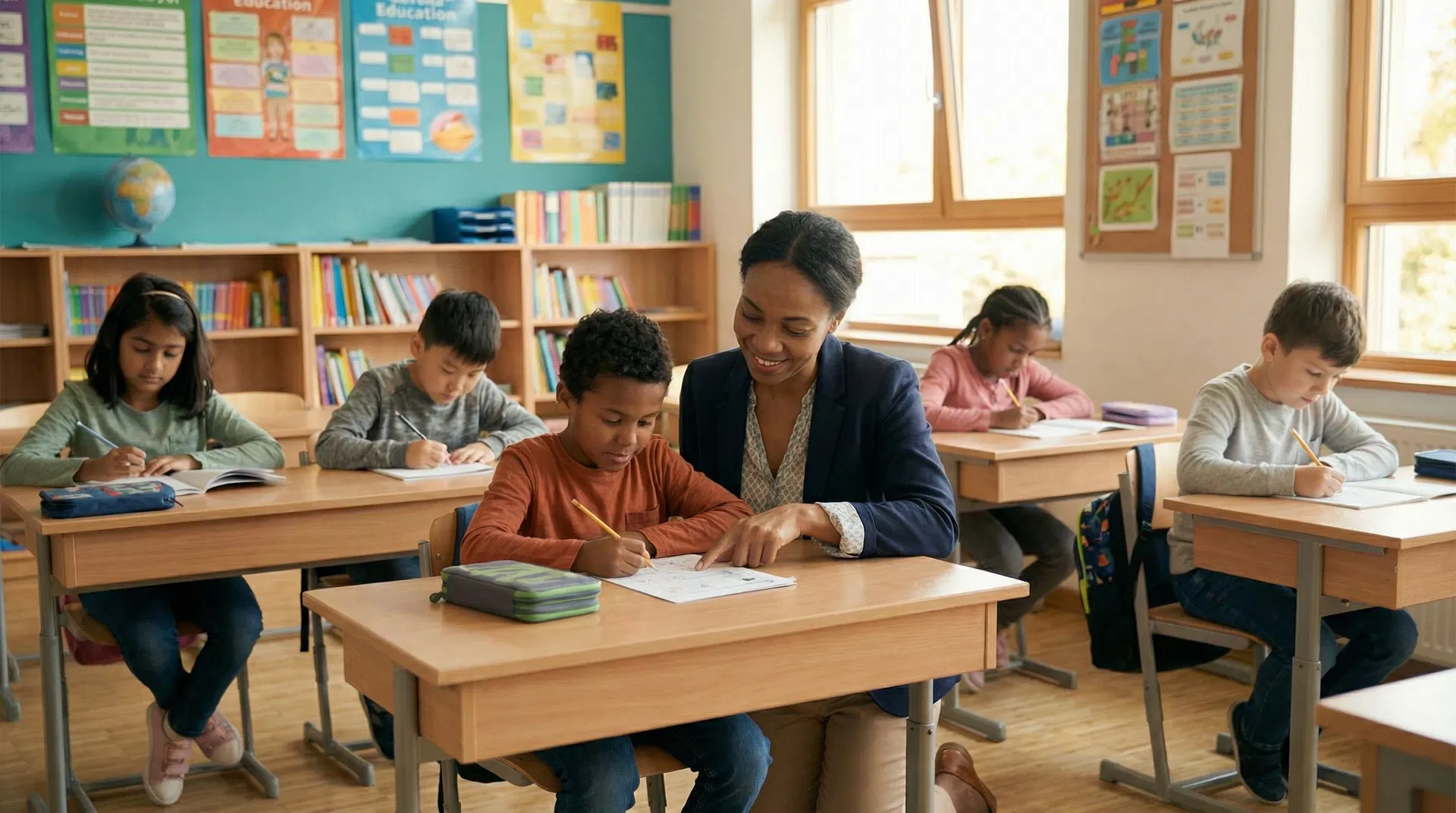
- Flexible Grouping: Group students based on readiness, interest, or learning style, and change these groups frequently.
- A group struggling with multiplication facts might work with the teacher, while another group practices problem-solving independently, and a third group explores advanced concepts.
3. Differentiating Product: How Students Demonstrate Learning
Product refers to the "how" students demonstrate what they have learned.
- Choice Boards/Menus: Offer students options for how they can show their understanding.
- USA Example: After a Grade 6 Science unit on states of matter (NGSS: MS-PS1-4), students could choose to write an explanatory essay, create a presentation, build a model, or design an infographic illustrating the properties and changes of matter.
- T&T Example: Following a Standard 5 English Language Arts unit on descriptive writing (T&T MoE Curriculum: Writing), students could choose to write a descriptive paragraph about their favorite place, draw and label a descriptive picture, or record an audio description.
- Rubrics with Options: Provide clear rubrics that allow for different levels of complexity or different types of evidence. Ensure the core criteria remain consistent, but allow flexibility in how students meet them.
4. Differentiating Environment: Where and With Whom Students Learn
Environment refers to the physical and emotional conditions in the classroom.
- Flexible Seating: Allow students some choice in where they sit (e.g., standing desks, floor cushions, traditional desks) to optimize comfort and focus.
- Quiet vs. Collaborative Spaces: Designate areas for quiet individual work and other areas for collaborative group work. Some students thrive in quiet, others need the energy of group interaction.
- Clear Routines and Expectations: A well-managed classroom with clear routines reduces anxiety and allows students to focus on learning, regardless of their learning style.
Managing a Differentiated Classroom
Implementing DI might seem daunting, but effective management makes it achievable:
- Start Small: Don't try to differentiate everything at once. Pick one area (e.g., content) and one lesson to start.
- Teach Independence: Explicitly teach students how to work independently, transition between tasks, and use resources.
- Establish Routines: Clear routines for group work, station rotation, and accessing materials are crucial.
- Use Formative Assessment: Regularly check for understanding through quick quizzes, exit tickets, observations, and student conferences. This data informs your differentiation decisions.
- Empower Students: Involve students in the differentiation process by asking them what they need and how they learn best.
How AI Tools Can Help
The advent of AI tools like GlobalTeachingBlock AI is a game-changer for differentiated instruction. These platforms can significantly reduce the planning burden on teachers.
- Lesson Plan Generation: GlobalTeachingBlock AI can generate differentiated lesson plans tailored to specific learning objectives, grade levels, and student needs. You can input a topic (e.g., "Grade 4 main idea," "Standard 3 plant parts") and specify different readiness levels or learning styles, and the AI can create varied activities, resources, and assessment ideas.
- Resource Curation: AI can quickly identify and suggest varied resources (articles, videos, interactive simulations) at different reading levels or in different formats, saving you hours of searching.
- Assessment Creation: AI can generate differentiated quizzes, rubrics, or project ideas that cater to various student abilities, ensuring that assessment truly reflects learning.
- Personalized Feedback: In the future, AI could even assist in providing personalized feedback to students, guiding them to resources that address their specific misconceptions.
Imagine inputting your Grade 5 Social Studies topic on the American Revolution and asking GlobalTeachingBlock AI to create three tiered reading passages, a choice board for product, and a rubric. The time saved allows you to focus more on student interaction and observation.
Conclusion
Differentiated instruction is not a luxury; it's a necessity in our diverse elementary classrooms. By thoughtfully varying content, process, product, and environment, we create a learning experience where every student feels seen, valued, and capable of success. While it requires intentional planning and ongoing assessment, the rewards are immeasurable: engaged learners, deeper understanding, and a classroom culture that celebrates individual growth. Embrace the challenge, leverage the power of tools like GlobalTeachingBlock AI, and watch your students flourish as you reach every learner, every day.