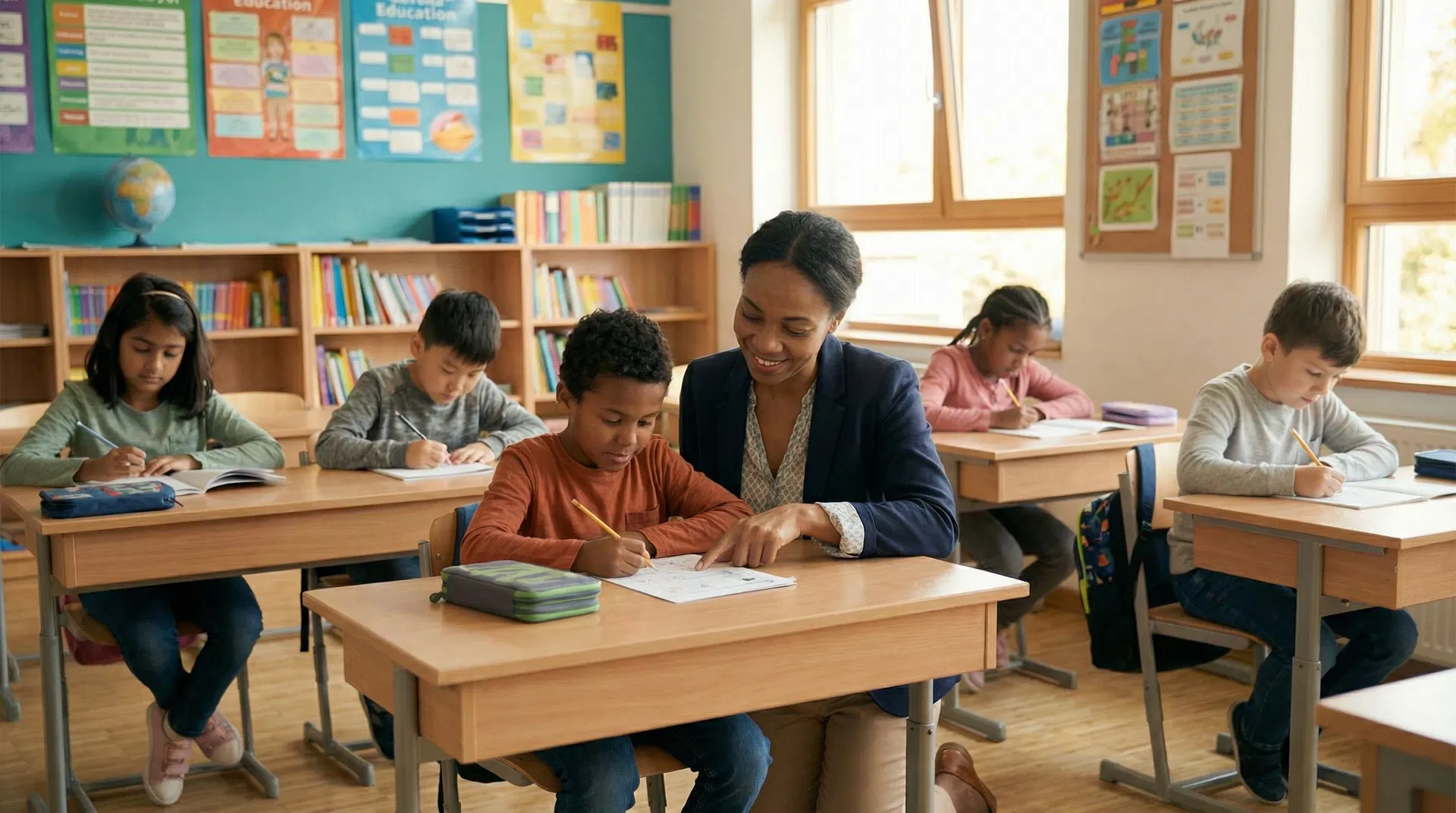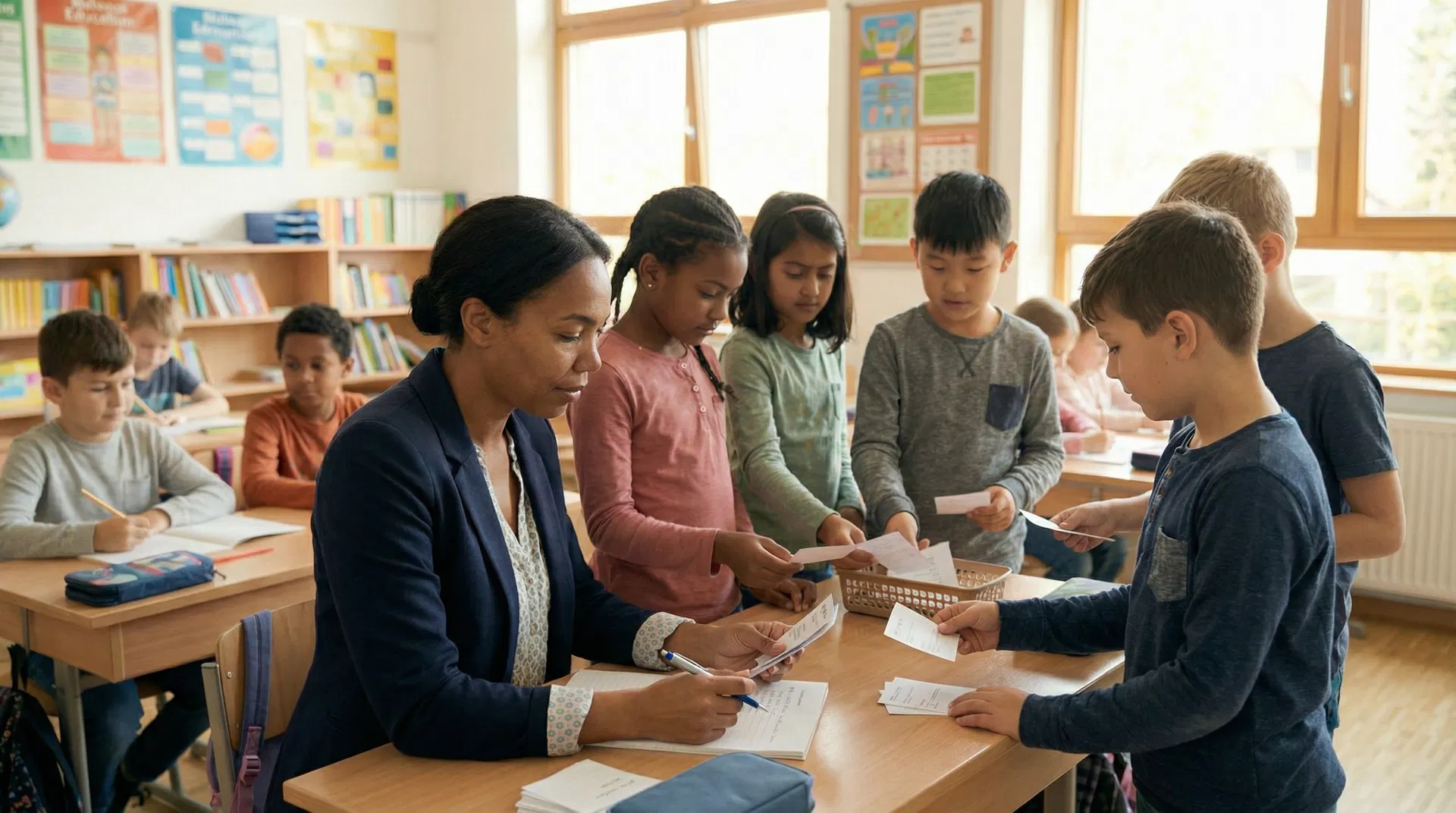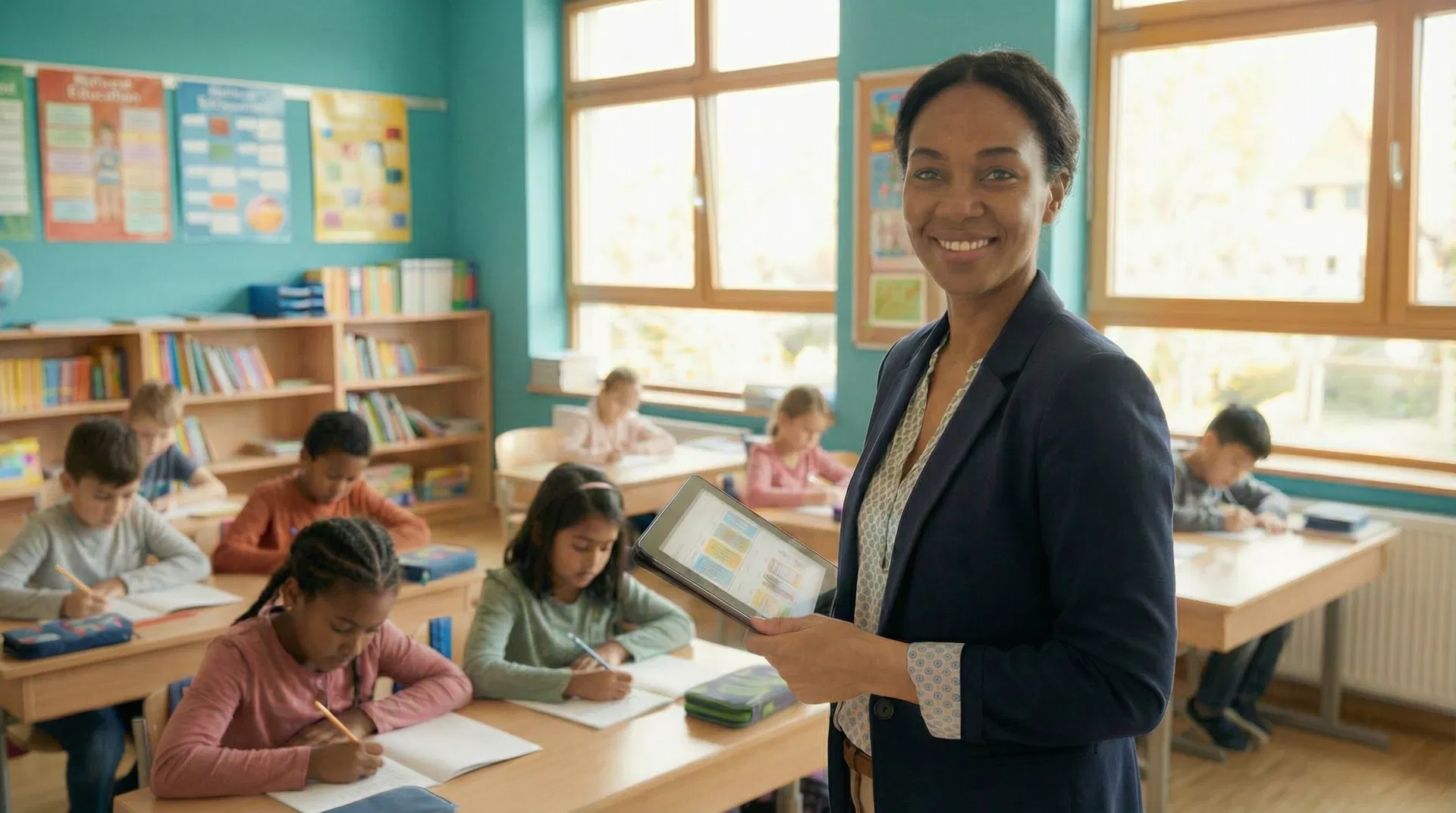
The bell rings, the children burst in, and another day of teaching magic begins! As elementary school teachers, your days are a whirlwind of nurturing young minds, managing diverse needs, and, of course, crafting engaging lessons. The heart of effective teaching often lies in meticulous planning, but let's be honest, the hours spent developing differentiated activities, finding the perfect resources, and aligning with standards can be overwhelming.
What if there was a way to reclaim some of that precious planning time, allowing you to focus more on the art of teaching and less on the administrative burden? Enter Artificial Intelligence (AI). Far from being a futuristic concept, AI is rapidly becoming a practical, powerful ally for educators, fundamentally changing how we approach lesson planning. It’s not about replacing the teacher, but empowering you with tools to enhance your craft and bring even more creativity and personalization to your classroom.
1. Supercharging Your Time Management with AI
One of the most immediate and impactful benefits of AI for elementary teachers is its ability to drastically cut down on planning time. Imagine having a personal assistant that can brainstorm ideas, draft outlines, and even suggest activities tailored to specific learning objectives. This isn't a dream; it's today's reality with AI tools.
- Instant Idea Generation: Need a creative hook for a science lesson on ecosystems (NGSS 3-LS4-3)? Or a fun way to introduce fractions (CCSS.MATH.CONTENT.3.NF.A.1)? AI can generate a list of engaging activities, games, and discussion prompts in seconds, saving you from endless scrolling through Pinterest or teacher blogs.
- Drafting Lesson Outlines: Provide AI with your topic, grade level (e.g., Standard 4 in T&T, Grade 5 in the USA), and learning objectives, and it can produce a structured lesson plan outline, complete with suggested timings and materials. You can then refine and personalize it.
- Resource Curation: AI can help you find relevant educational videos, interactive simulations, or printable worksheets that align with your curriculum goals, like C3 Framework for Social Studies State Standards for a lesson on local government.
2. Personalizing Learning Like Never Before
Every elementary classroom is a beautiful mosaic of different learning styles, paces, and needs. Differentiating instruction for each student can be incredibly challenging, but AI offers powerful solutions to make personalized learning more achievable.
- Tailored Activity Generation: For a reading comprehension lesson (CCSS.ELA-LITERACY.RL.4.1), you might have students at varying reading levels. AI can generate multiple versions of a reading passage or comprehension questions, adjusting vocabulary and complexity to suit individual students. For instance, creating a simpler version for emergent readers and a more complex one for advanced learners.
- Adaptive Practice Questions: AI-powered platforms can create customized practice problems for math (e.g., T&T MoE Standard 3 on multiplication) or grammar, adapting the difficulty based on a student's performance. This ensures every child is challenged appropriately, preventing frustration or boredom.
- Scaffolding and Enrichment: If a student is struggling with a concept, AI can suggest scaffolding strategies or simpler explanations. Conversely, for advanced learners, it can propose enrichment activities or deeper dives into the topic.
3. Enhancing Creativity and Engagement
AI isn't just for efficiency; it's a fantastic springboard for creativity. By handling the more mundane aspects of planning, AI frees up your mental energy to focus on innovative teaching strategies and crafting truly memorable learning experiences.
- Generating Engaging Story Prompts: For a creative writing lesson, AI can produce unique story starters, character profiles, or plot twists that spark imagination, aligning with writing standards like CCSS.ELA-LITERACY.W.3.3.
- Developing Interactive Games: Describe a learning objective, and AI can help you design simple, educational games or quizzes. For example, a game to practice sight words or identify parts of speech.
- Creating Diverse Perspectives: When teaching social studies or literature, AI can help generate different viewpoints or scenarios to encourage critical thinking and empathy, crucial for C3 Framework standards.
4. Streamlining Assessment and Feedback
While AI is primarily a planning tool, its capabilities extend to supporting assessment, which directly impacts future lesson planning. Understanding student progress helps you refine your next steps.
- Drafting Rubrics: AI can generate draft rubrics for projects or presentations based on your learning objectives, saving you significant time. You can then customize them to fit your specific classroom needs.
- Question Generation: Need a quick quiz on a recent topic? AI can create multiple-choice, true/false, or short-answer questions aligned with your lesson content.
Integrating AI into Your Routine with GlobalTeachingBlock AI
The key to successfully using AI in your elementary classroom is to view it as a co-pilot, not an autopilot. Tools like GlobalTeachingBlock AI are specifically designed to assist teachers in this new landscape. Imagine inputting your curriculum standards, your students' current learning levels, and your desired lesson topic, and receiving a comprehensive, customizable lesson plan draft in minutes. This allows you to spend less time on the mechanics of planning and more time on the art of teaching – connecting with your students, observing their growth, and fostering their love for learning.
Practical Steps to Get Started:
- Start Small: Pick one area where you feel most overwhelmed, like brainstorming activity ideas or drafting a lesson outline, and use an AI tool for that specific task.
- Experiment: Try different prompts and see how AI responds. The more specific you are with your requests, the better the output will be.
- Review and Refine: Always review AI-generated content critically. It's a starting point, not a final product. Adapt it to your unique teaching style and your students' needs.
- Focus on the 'Why': Let AI handle the 'what' and 'how' of basic planning, so you can focus on the 'why' – the deeper pedagogical reasons behind your choices and the emotional connection with your students.
Conclusion: Embracing the Future of Elementary Education
AI is not a threat to the art of teaching; it's an incredible opportunity to elevate it. For elementary school teachers in the USA and Trinidad & Tobago, AI tools offer a pathway to more efficient planning, deeply personalized learning experiences, and a renewed focus on the joy of teaching. By embracing these intelligent assistants, you can reclaim valuable time, spark greater creativity in your classroom, and ultimately, make an even bigger impact on the young minds you shape every day. The future of elementary education is here, and it's exciting! Are you ready to explore how AI can transform your lesson planning?